
The Top 5 Industries Most Impacted by Ransomware in Q1 2026
The GuidePoint Security Research & Intelligence Team (GRIT) recently released a new ransomware report focused on cyber attacks in Q1 2026. The data reveals some interesting insights about the top industries most impacted by ransomware.
TL;DR: The GRIT Q1 2026 Ransomware & Cyber Threat Insights Report reveals that the industries most impacted by ransomware are manufacturing, technology, construction, healthcare, and legal.
Key Takeaways:
- Multiple threat-actor groups, including The Gentlemen, have ramped up attacks by leveraging Ransomware-as-a-Service platforms
- Manufacturing maintains the top spot on the list as the most impacted industry for ransomware in Q1 2026
- The construction sector has moved up on the list with at 44% YoY increase over Q1 2025
Let’s dive into the findings.
Which Industries Were Most Impacted by Ransomware from January-March 2026?
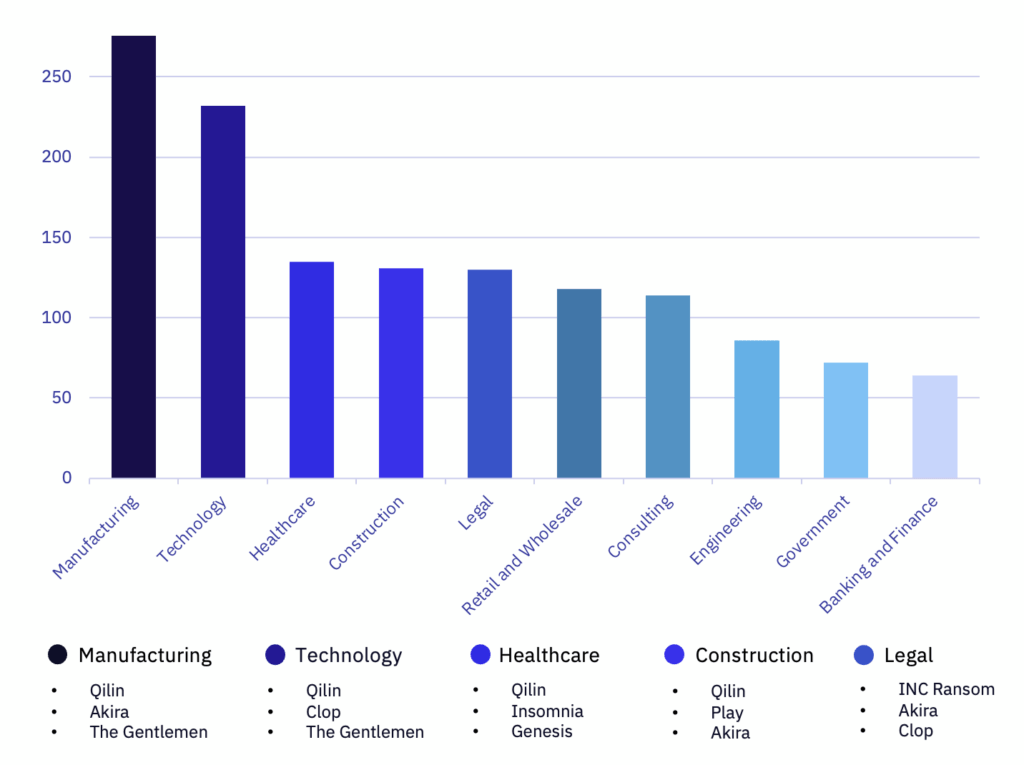
Manufacturing remained the most impacted industry for ransomware attacks in Q1 (January-March) 2026, holding steady at that ranking year-over-year (YoY). Newer ransomware groups (e.g., Insomnia and Genesis) and veteran group Qilin, led to disproportionate impacts on Healthcare. In contrast, all other industries were most impacted by “the usual players” – Qilin, Akira, Play, Clop, and INC Ransom.
The Gentlemen, a group that rose to become the second most active ransomware group in Q1 appeared for the first time in the “Top 3” for several industries. This stands out given they only recently emerged in the ransomware ecosystem (2H of 2025). Their outsized performance early on could indicate that the group’s core administrators or affiliates have experience from other Ransomware-as-a-Service groups, which kick-started the group’s operations.
Industry Spotlight: Construction

The construction sector is an attractive ransomware target likely because of operational and structural vulnerability convergence. Construction advanced from sixth to fourth in GRIT’s impacted industry rankings, trailing only manufacturing, technology, and healthcare. In Q1 2026, there were 131 recorded ransomware victims in construction. This represents a 12% quarter-over-quarter (QoQ) increase from Q4 2025 (117 victims) and a 44% YoY increase over Q1 2025 (91 victims). This growth is notable against a broader trend of declining ransomware victims QoQ. Construction was among the few sectors to move in the opposite direction.
Operationally, the construction sector is highly sensitive to disruption, as halted work can trigger contract penalties, damage client relationships, and jeopardize future bids. Project documentation like blueprints, engineering drawings, subcontractor bids, RFIs, and change orders all carry independent extortion value beyond the impact of encryption alone. Specialty contractors routinely maintain connectivity to client and general contractor networks. This means a single compromise can produce lateral exposure across multiple organizations. At the infrastructure level, cybersecurity investment in construction often lags across the sector, with many firms running legacy infrastructure and limited detection capabilities.
Which are the Top Threat Actors Targeting Construction Organizations?
Twenty-two distinct threat groups claimed construction victims in Q1 2026. The top four – Qilin, Play, Akira, and DragonForce – accounted for 72 or 55% of all construction victims. The construction sector’s counter-trend growth in victim counts, combined with independent convergence from multiple threat actors, suggests sustained and increasing targeting activity going forward. GRIT assesses that construction will remain among the five most impacted industry verticals through Q2 2026. Organizations in the sector, particularly specialty contractors and firms with government or enterprise relationships, should treat elevated ransomware exposure as a baseline operating condition.
Want to learn more?
Download the Report
To dive deeper into these trends and learn more about how to mitigate and detect attacks, download the full GRIT Q1 2026 Ransomware & Cyber Threat Insights Report.